The Downtown Development Authority’s design chief, Geoff Dyer, aided by handsome renderings of a European-style plaza surrounding the monument and with Michael Cullen, a landscape architect contracted for the project, standing nearby, explained the scope of the proposal: It’s part of the Downtown Master Plan, has been in the planning and design phase for several months, the City-Parish Council has already approved the funding, DDA would begin construction after Festival International de Louisiane at the end of April. The genesis of the project, Dyer noted often, was a desire among stakeholders — tenants of the adjacent former City Hall building such as Le Centre, and other Downtown interests — to make the space more user-friendly and inviting for the general public.

Anticipating an inevitable turn in the conversation, Dyer noted at one point that moving the General Mouton monument was never part of the plan or ongoing discussions; because a handful of attendees were there with an interest outside of whether the space retains its green character or goes Euro. They held signs reading “Alfred Geaux Home” and “Why Alfred.” One of them, Frank Crocco, when he finally got an opportunity to speak during the lengthy back-and-forth between Dyer and the conclave, turned the dialogue to the man on the pedestal:
I support renovating this space so we can make actual use of it. I take my kids here, and there’s no place to sit, no shade. I understand all that. But what concerns me is the statue that’s standing in a place of prominence here. How do I explain to my three children why we’re celebrating Alfred Mouton as opposed to, say, Jean-Jacque Mouton, who actually did something ... founded Vermilionville.
Alfred died in the Civil War. The Daughters of the Confederacy picked him because he died in the Civil War — that’s why he’s there, right? And we know from Carl Brasseaux that [Alfred] led vigilante groups that murdered Cajuns for helping escaped slaves. There is really no argument for having a statue of Alfred Mouton here; there’s a better place for that history. I’m not saying we forget that history — history is complicated. Move him to the Mouton House a few blocks away. We want to build up a pedestal, but let’s put something [on it] the community can get around.
...We have visitors from around the world and the first thing they see is a Confederate soldier who murdered Cajuns? What message does that send to them? I think we need a better statue, and I think we can do better as a community.
A caveat here: Crocco in the above is referencing the work of historian Carl Brasseaux and his exhaustive research into the development of Cajun culture in South Louisiana. While Brasseaux’s work does appear to tie Mouton to antebellum vigilante groups that committed some rather horrendous acts of “justice,” the claim that Mouton killed slave-aiding Cajuns is dubious as best we can ascertain at this point. The Independent reached out to Brasseaux last week via email to discuss his research, but we have yet to hear back from him.

While Crocco’s statements about Mouton and the plaza that has memorialized him for more than nine decades generated a smattering of claps from the group, they were mostly met with stone silence. Obviously no one in Lafayette welcomes the enmity gushing through the veins of New Orleans as it publicly debates the fate of its own — and decidedly more glorious — monuments to the Confederacy. But can we even talk about it? Should we?
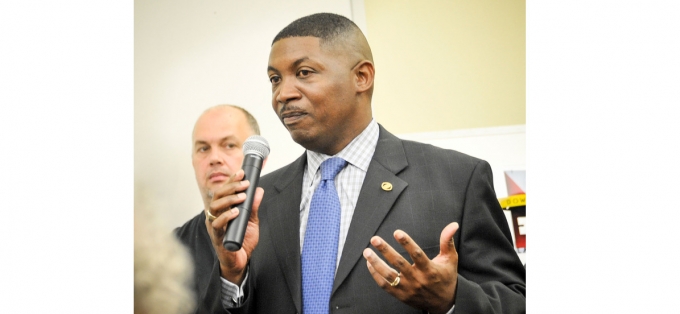
Perhaps the most compelling moment came near the end when Cajundome Director Greg Davis showed up and spoke briefly but intensely about his parents’ experiences growing up in the Jim Crow South in referencing the Mouton statue. Davis would ultimately stand with the small coterie of protesters and hoist an “Alfred Geaux Home” sign. Davis has a prominent profile for community activism, but decidedly not one of muckraking.
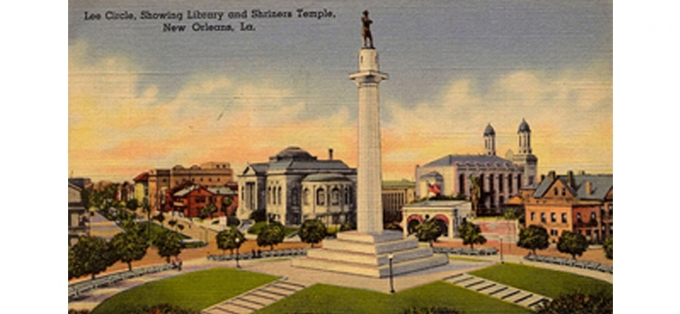
We can argue all we want about what the General Mouton statue is meant to convey. But as biographer Walter Isaacson notes in an op-ed at The Advocate Monday, “Monuments exist for a purpose. That purpose is to convey a message.”

What’s the message of Alfred Mouton? The words of a member of the United Daughters of the Confederacy at the April 7, 1922, unveiling of the monument, according to the day-after account in The Advertiser, are revealing: “In honoring General Mouton we are honoring ourselves, for we are today perpetuating the very best that has been achieved by our great and truly noble Southern race.” The Lafayette Concert Band, according to the account, performed “Dixie.” It is safe to wager there was not a black soul in earshot at that unveiling — a treacly event that was one of hundreds occurring across the former Confederacy in the decades after Reconstruction as the actual veterans of America’s great conflict were dying off and the blacks freed by its flames fought for a voice in our civic conversation.
We recommend Isaacson’s thoughts in The Advocate for a civil discussion about finding firm footing on this slippery slope.