According to a press release issued Monday:
Eighty-five percent of people accused of a crime in Louisiana are indigent. The state’s failure to treat them equally under the law has sweeping ramifications. Louisiana has the nation’s highest incarceration rate and the second-highest wrongful conviction rate. A disproportionate number of those incarcerated are people of color, particularly black Louisianans, who comprise nearly 70 percent of the state prison population.
The U.S. and Louisiana constitutions guarantee the right to meaningful and effective assistance of counsel to anyone charged with a crime punishable by imprisonment. Lawyers are required to communicate with their client about strategy, to conduct an investigation, pursue discovery, research legal issues, file appropriate pretrial motions and advocate for the client in court. The attorney also must possess the skill, training and time to adequately complete these requirements. In Louisiana, system-wide defects prevent public defenders from satisfying these basic obligations to their clients.
The number of public defenders and other professionals needed for a functioning public defense system in Louisiana falls far below national standards. Most criminal defendants in the state receive attorneys in name only.
Poor people often sit in jail for months before a public defender is appointed or takes up the case, according to the complaint. While their cases stagnate, jobs are lost, children are left without parents and evidence becomes stale. Without timely appointment of counsel, the poor are denied any meaningful investigation of the prosecution’s case, advocacy during arraignments and bond hearings that could result in a reduction or dismissal of charges or release on bond, access to witnesses and evidence, and assistance with plea negotiations.
Even when attorneys are finally provided, public defenders in Louisiana – who regularly carry two to five times the number of cases recommended under the already inflated Louisiana Public Defender Board’s standards – are often so overwhelmed that they can do little more than recommend a plea agreement.
Louisiana is the only state in the country that relies primarily on court fees and fines to fund public defender legal services. Perversely, this includes a fee assessed against convicted indigent defendants. Public defender offices receive more funding for losing cases than for winning them. Despite critical comment from the courts and authoritative studies, the system has not provided adequate representation for decades.
The suit alleges that the plaintiffs — all indigent adults in Louisiana facing non-capital criminal charges punishable by imprisonment — “have been denied due process,equal protection of the law and the right to counsel under the U.S. and Louisiana constitutions,” and it seeks an injunction prohibiting the state from maintaining an inadequate public defender system while asking that a monitor be appointed to supervise reforms to the system.

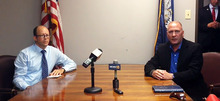
G. Paul Marx (speaking next to microphone), head of the local public defenders office, leads a criminal-law training session last year for civil attorneys who volunteered to take criminal cases.
Photo by Robin May
Lafayette Parish and the three-parish 15th Judicial District of which it’s a part have not been immune to problems with a cash-strapped public defender system. As we reported last week, about 150 local attorneys, most of them civil attorneys with little experience representing criminal defendants, have been volunteering their time to help judges in the judicial district clear their dockets of mostly petty misdemeanors and other crimes that don’t threaten jail time. The attorney’s answered a call put out last year by 15th JDC Judge Patrick Michot, whose criminal docket was clogged with defendants who had no legal representation after the local public defender’s office, citing state budget cuts, said it was forced to stop representing misdemeanor defendants.
Read that story, “With more cuts looming, local lawyers step up to keep criminal defense limping along,” by clicking here.