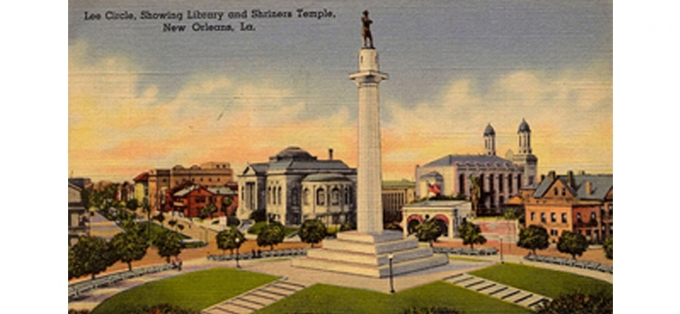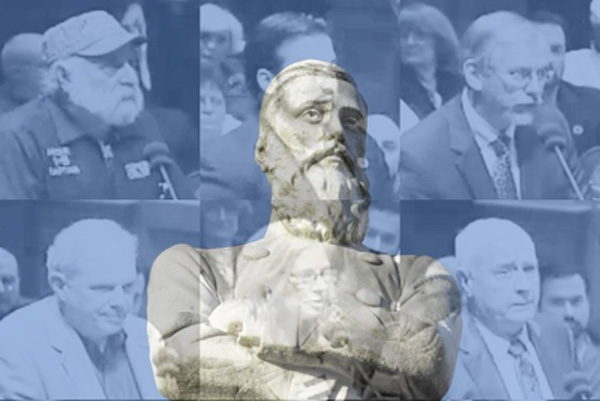
One by one they came to the podium — the White People and their racial amnesia — to defend a 94-year-old monument to a Confederate brigadier general erected by the United Daughters of the Confederacy at the height of Jim Crow. They trundled out virtually every rhetorical device and logical fallacy in the book, a straw man feasting on a red herring.
“Without a doubt this is a copycat event by a few who saw what was happening in New Orleans and I guess they just want to see if they can make it happen here in Lafayette.”
“George Orwell said, the most effective way to destroy people is to destroy and obliterate their own understanding of their history.”
“There were a whole lot of [Confederate generals] who died on the field of battle and their men didn’t care very much, but when General Mouton died his men cried.”
“Nobody in this room was alive when the statue was dedicated.”
“Are we going to dismantle the Washington Monument or the Jefferson Memorial because they owned slaves?”
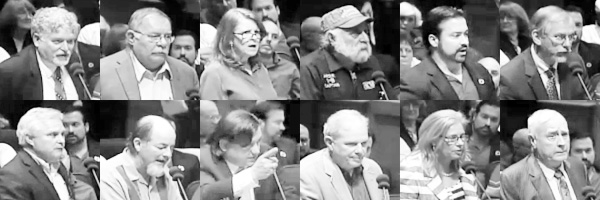
View a gallery of images from Tuesday night's discussion at the Lafayette City-Parish Council meeting here.
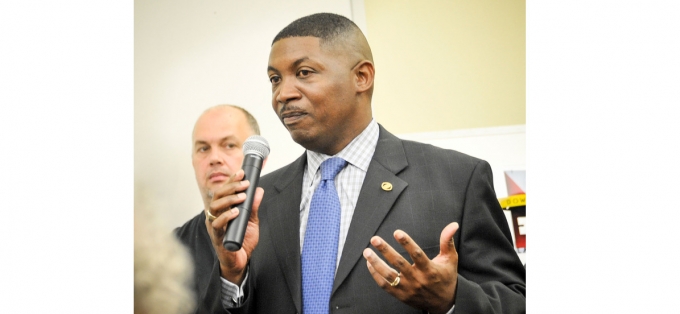
But interspersed among the White People’s defense of the indefensible were the comments of our black neighbors whose view of the monument is informed by much different civic and life experiences and for whom the Confederacy, no matter how “noble” or “gallant” its bearded men may have been, can never be separated from the abomination of slavery. And those comments fell largely on deaf ears, or maybe more precisely on ears that are incapable of hearing certain frequencies.
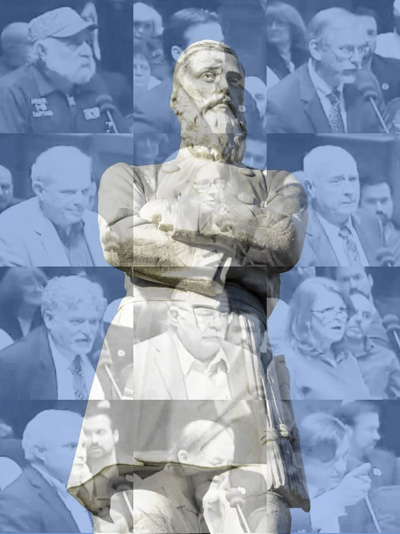
And unfortunately the heart of the matter, the real issue — specifically why, in 1922 at the height of the Jim Crow era in the Deep South, our community saw fit to honor a Confederate general nearly 60 years after he died — was only rarely broached and not at all by the White People. They only see their history, their heritage in the monument at the expense of what it represents to a quarter of the population of Lafayette. Who Alfred Mouton was matters infinitely less than why Lafayette erected a monument to him in the first place. Context matters.
And for those who say relocating the Mouton monument is a form of rewriting history, I say the monument itself was part of a decades-long postwar effort among Southerners and apologists for the Confederacy to rewrite history, to assuage our racial guilt and reassure ourselves that the Civil War wasn’t about slavery. It was. It still is.
Watch the public comment portion related to the Mouton monument at last night’s City-Parish Council meeting here.